Social Icons

Featured Posts

الأحد، 22 مايو 2016

Full Reviews:MINIX NEO U1

MINIX NEO U1 Technical Specifications

General

  • Processor
    Amlogic S905
  • CPU
    Quad-Core Cortex-A5 at 1.5GHz
  • GPU
    Penta-Core ARM® Mali™-450
  • Operating System
    Android Lollipop 5.1.1
  • RAM
    2GB DDR3
  • Storage
    16GB eMMC 5.0
  • Other Features

    IR Sensor
    Power button
  • Power
    DC 5V/3A

Interfaces

  • Video Output
    HDMI 2.0
  • Audio Output
    SP-DIF, 3.5mm Audio
  • Other Interfaces

    3 x USB 2.0
    1x micro USB OTG
    Microphone Input

Connectivity

  • WiFi
    802.11ac 2 x 2 MIMO Dual-Band Wi-Fi (2.4GHz/5.0GHz)
  • Ethernet
    1000Mbps
  • Bluetooth
    4.1


    What’s Inside The Box?

    MINIX have continued their tradition of providing a impressive set of inclusions within the box:
    • 1x MINIX NEO U1 unit
    • 1x Wifi Antenna
    • 1x IR Remote
    • 1x Power Adapter
    • 1x HDMI cable
    • 1x USB OTG cable
    • 1x USB to micro USB cable
    • 1x Instruction Manual

    MINIX NEO U1 Review: Design

    The first thing that strikes you about the MINIX NEO U1 is just how solid it feels. The whole unit feels like it’s built like a tank, with a metal case and an impressive weight to it that makes it feel more substantial than its competitors.
    The unit is a typical black square with a matte black finish, with embossed MINIX branding dominating the top of the unit. Ports are located on the right and rear sides of the MINIX NEO U1. The right side houses the power button, 3 fullsize USB ports, micro SD card slot, micro USB OTG port and a Kensington lock port.
    The included remote is essentially identical to the pack-in remotes with other MINIX devices to date. It’s visually distinctive and fits nicely in the hand. It’s got basic functionality such as Android buttos and volume controls. I would have liked to see media controls but you can work around it. The buttons are a little clicky so presses are audible.
    As usual, I’d thairmouse for a much better experience.
    MINIX NEO U1 Review: Using It
    Booting up the Minix Neo U1 takes around 28 seconds with a wireless keyboard and mouse connected. Resuming from standby is instant.
    Out of the box, there’s a single 11.87GB partition which has 11.18GB free.
    MINIX have provided their TV-friendly MINIX launcher. Heavily using their trademark green and black colour scheme, the launcher uses attractive flat tiles with large icons of various shades of green and grey. It looks great. Apps can be manually organised 
    into categories such as Online Video and Games for easy access.

    MINIX NEO U1 Review: Media Playback

    The MINIX NEO U1 comes with stock Kodi 15.2 pre-installed. However, MINIX recommends that XBMC MINIX Edition which can be downloaded from their site. It looks like stock Kodi 15.2 with a custom splash screen but I’m guessing most of the changes are under the hood.
    AdBlock detected!
    I know you hate ads but it keeps this site alive. Please consider adding hometheatrelife.com to your adblocking whitelist or consider donating.
    Having issues with links?
    Adblockers are known to break the Shareasale links on the web - including those that keep this site alive. If you're noticing an issue, consider disabling your adblocker 
    temporarily or whilelist shareasale.com.
    Video CodecVideo Performance (Kodi 15.2)
    1080p 3D SBS H.264OK
    1080p 3D ABL H.264OK
    1080p24 H.264OK
    1080p High Bitrate H.264Unwatchable (Dropped Frames)
    1080p60 H.264OK
    720p50 H.264OK
    1080i25 H.264OK
    4K 30FPS H.264OK
    4K 60FPS H.264Unwatchable (Video lags behind Audio)
    1080p24 HEVCOK
    1080p VP8OK
    720p Hi10pOK
    1080p Hi10pUnwatchable (Decoding Issues)
    1080p MPEG2OK
    1080p VC1OK
    Unencrypted Bluray ISO (Sintel)OK
    Video playback performance was good, with only several formats causing issues for the MINIX NEO U1, such as 1080p Hi10p and 4K 60FPS content which trips up 99% of boxes.
    It was surprising that the high bitrate samples struggled to play back though the number of 120Mbps you’ll encounter are rare.
    Automatic framerate switching works, which is fantastic. Kodi automatically changes the frame rate to match the video codec, making video playback far smoother. I was able to play back 23.976FPS content without any obvious artifacts.
    Deinterlacing performance was good, with interlaced samples not showing any obvious artifacts during playback.

    5.1 Audio Passthrough

    Dolby Digital 5.1 passthrough worked fine via HDMI.

    Netflix

    Netflix works via the Android app. However, playback resolution is limited to 480p like most other Android boxes.

    External Storage Support

    I was able to play back movies from my 2.5″ USB-powered hard drive without any issues.

    MINIX NEO U1 Review: Gaming Performance

    To test gaming performance, I installed 2 games,1 2D and 1 3D titles:
    Gaming on the MINIX NEO U1 was solid, like we’ve seen with other Amlogic S905 boxes. Jetpack Joyride played well, without any slowdown. Similarly, Beach Buggy Racing maintained a fairly solid framerate at 1080p on maximum settings. There was only rare frame rate drops when there was a lot of action on screen.

    Wireless Performance

    Wireless performance was excellent, with the MINIX NEO U1 being one of the faster devices over WiFi that I’ve tested to date.
    On the 2.4GHz band, upload and download speeds were 90.4Mb/s and 84.3Mb/s respectively.
    Changing over to the 5GHz band sees the speeds increase dramatically, to 250Mb/s upload and 276Mb/s download.
    In terms of real world performance, streaming 4K and 1080p H.264 samples from an NFS share on my server played back perfectly without any buffering.

    Ethernet Performance

    Ethernet performance was good, reaching 576Mb/s upload and 776Mb/s down.

    MINIX NEO U1 Review: Benchmarks

    BenchmarkScore
    Antutu 6.038026
    Antutu Video Tester 3.0 884
    3DMark Ice Storm Unlimited7221
    3DMark Ice Storm Extreme4222
    GeekBench 3 Single Core607
    GeekBench 3 Multi Core1720

    MINIX NEO U1 Review: Power Consumption

    OffStandbyIdle1080p24 VideoUnder Load
    0.1W0.6W3.5W4.2W7.1W


    :Shop Now From

    http://www.pandawill.com/minix-neo-u1-tv-box-amlogic-s905-quad-core-android-51-with-airmouse-2gb-16gb-black-p112205.html
    Free shipping

    Full Reviews:Sony a6300

    The Sony a6300 is the company's latest mid-range mirrorless camera. Like the a6000 it still offers 24MP resolution but the autofocus ability, video capability, build quality, viewfinder resolution and price have all been increased.
    The most exciting change from our perspective is the a6300's new sensor. Although the pixel count remains the same, the a6300's sensor has a whopping 425 phase-detection AF points ranged across the sensor. The a6000 already offered one of the best AF systems in its class, when it comes to identifying and tracking subjects, so an upgrade in this area sounds extremely promising. The sensor is also built using newer fabrication processes that use copper wiring to help improve the sensor's performance and possibly contributing to the camera's slightly improved battery life.
    The a6000 has been a huge success and has dominated its field to the extent that its combination of capability and price still looks impressive even as it enters the twilight of its career (Sony says it will live on, alongside the a6300*). That model represented a dip down-market for the series, with a drop in build quality and spec relative to the NEX-6 that preceded it. The a6300 corrects that course, and sees the model regain the high resolution viewfinder and magnesium-alloy build offered by the older NEX-6 (and the level gauge, which was absent from the a6000).

    Key features:

    • 24MP Exmor CMOS sensor
    • 425 phase detection points to give '4D Focus' Hybrid AF
    • 4K (UHD) video - 25/24p from full width, 30p from smaller crop
    • 2.36M-dot OLED finder with 120 fps mode
    • Dust and moisture resistant magnesium-alloy body
    • Built-in Wi-Fi with NFC connection option
    • Built-in microphone socket
    As with the previous 6-series E-mount cameras, the a6300 features a flip up/down 16:9 ratio screen. The shape of this screen hints at the 6300's intended uses: video shooting, as well as stills. The a6300's movie features have been considerably uprated. It not only shoots 4K (UHD) at 24p or 25p from its full sensor width (or 30p from a tighter crop). It also gains a mic socket, the video-focused Picture Profile system (which includes the flat S-Log2 and S-Log3 gamma curves), and the ability to record time code.
    This added emphasis on video makes absolute sense, since the camera's stills performance is likely to be competitive with the best on the market but its video capabilities trounce most of its current rivals. The a6300 not only includes focus peaking and zebra stripes but, if its on-sensor phase detection works well, the ability to re-focus as you shoot with minimal risk of focus wobble and hunting, should make it easier to shoot great-looking footage.
    All this makes it hard to overstate how promising the a6300 looks. A latest-generation sensor can only mean good things for the camera's image quality and an autofocus system that moves beyond the performance of one of our benchmark cameras is an enticing prospect. Add to that excellent, well-supported video specifications, a better viewfinder and weather-sealed build, and it's tempting to start planning for the camera's coronation as King of the APS-C ILCs. Perhaps with only the price tag floating over proceedings, threatening just a little rain on that particular parade.

    Specifications compared:

    As well as comparing the a6300 with the a6000 as its predecessor/sister model, we'll also look at what you get if you save up a bit more money and opt for full-frame, rather than APS-C. We think at least some enthusiast users will find themselves making this decision, so are highlighting the differences.
    Sony a6000Sony a6300Sony a7 II
    MSRP (Body Only)$650$1000$1700
    Sensor sizeAPS-C (23.5 x 15.6mm)APS-C (23.5 x 15.6mm)Full Frame (35.8 x 23.9 mm)
    Pixel count24MP24MP24MP
    AF systemHybrid AF 
    (with 179 PDAF points)
    Hybrid AF 
    (with 425 PDAF points)
    Hybrid AF 
    (with 117 PDAF points)
    Continuous shooting rate11 fps11 fps5 fps
    Screen3" tilting 921k dot LCD3" tilting 921k dot LCD3" tilting 1.23m dot LCD
    ViewfinderOLED 1.44M-dotOLED 2.36M-dot w/120 fps refresh optionOLED 2.36M-dot
    Movie Resolution1920 x 1080 / 60p4K 3840 x 2160 / 30p, 1920 x 1080 / 120p, 60p1920 x 1080 / 60p
    Image stabilizationIn-lens onlyIn-lens onlyIn-body 5-axis
    Number of dialsTwoTwoThree (plus Exp Comp.)
    Maximum shutter speed1/4000 sec1/4000 sec1/8000 sec
    Built-in flash YesYesNo
    Hot shoeYesYesYes
    Flash sync speed1/160 sec1/160 sec1/250 sec
    Battery life
    (with EVF)
    360 shots 
    (310 shots)
    400 shots
    (350 shots)
    350 shots
    (270 shots)
    Weight (w/battery)344 g (12.1 oz)404 g (14.3 oz)599 g (21.1 oz)
    Dimensions120 x 67 x 45 mm (4.7 x 2.6 x 1.8 in.)120 x 67 x 49 mm (4.7 x 2.6 x 1.9 in.)127 x 96 x 60 mm (5 x 3.8 x 2.4 in.)

    A hit-for-six, slam-dunk, home-run?

    If it's successful in its attempts to step up from the performance of the a6000 then the a6300 could be sensational. However, there are three questions that we'd like to see addressed. The first relates to handling: why does a camera costing this much only have one dial that you can access without changing the position of your grip? The rear dial isn't the worst we've encountered, but at this price point, we'd usually expect to find a dial under the forefinger and another under the thumb while maintaining a shooting grip.
    The second relates to lenses. Sony is bundling the a6300 with the 16-50mm power zoom that's far more notable for its convenience than its optical consistency, a move that's likely to raise the question of what other lenses to fit. Sony offers a handful of reasonably priced APS-C-specific prime lenses as well as some more expensive FE-compatible full-frame primes. However, in terms of standard zooms, you're currently limited to the inexpensive 16-50mm, the older 18-55mm at aftermarket prices or considerably more expensive options such as the 18-105mm F4 or the 16-70mm F4 Zeiss that costs around the same amount as the camera again. The success of Sony's full frame a7 cameras is only likely to improve third-party lens availability but there's a risk that Sony's focus will be on those full frame users for the foreseeable future.
    Our final concern is the lack of joystick or touchscreen to re-position the AF point. This may be mitigated during stills shooting if the lock-on AF system works well enough (starting AF tracking and then recompose your shot in the knowledge that the AF point will stay where you want it), but it appears to be a real omission for refocusing while shooting video. The a6300 is improved over previous models, in that pressing the center button on the four-way controller toggles into AF point selection mode, a decision that's retained even if you turn the camera off and on again. We'll see how significant all these concerns turn out to be, as the review unfolds.

    Price and kit options

     The 16-50mm power zoom is far more notable for its convenience than its optical consistency.
    The a6300 body has a suggested retail price of $1000/£1000/€1250, with a 16-50mm F3.5-5.6 power zoom kit commanding an MSRP of $1150/£1100/€1400. This is a significant step up from the a6000's $650/$800 launch price and even an increase compared to the similarly well-built NEX-6's $750/$900 MSRP.
     Review History
    17 March 2016Intro, Specs, Body and Handling, Operations and Control and Studio Comparison published
    22 March 2016Updated studio scene images published (inc electronic-shutter and better lens)
    31 March 2016Video and Video Shooting Experience pages added
    6 April 2016Autofocus, Image Quality, Raw Dynamic Range and Conclusion published
    *Unusually, the manufacturer's claim that it'll live on, alongside its apparent replacement model seems plausible. The differences in spec and price could allow them to sit fairly comfortably alongside one another, rather than the claim simply meaning 'we'll keep saying it's a current model until most of the unsold stock has gone, to avoid angering retailers.'
    camera,sony,review,appareil photo,a6300

    Full Review: Acer Predator 17x

    While the PC industry looks to VR as its next big thing in gaming, the trend of cramming desktop-class GPUs into notebook designs has quietly taken hold in upper ends of the market. Both MSI and Asus already have portable rigs with a desktop-class Nvidia GTX 980 GPU, and now Acer joins the fray with its new Predator 17X.
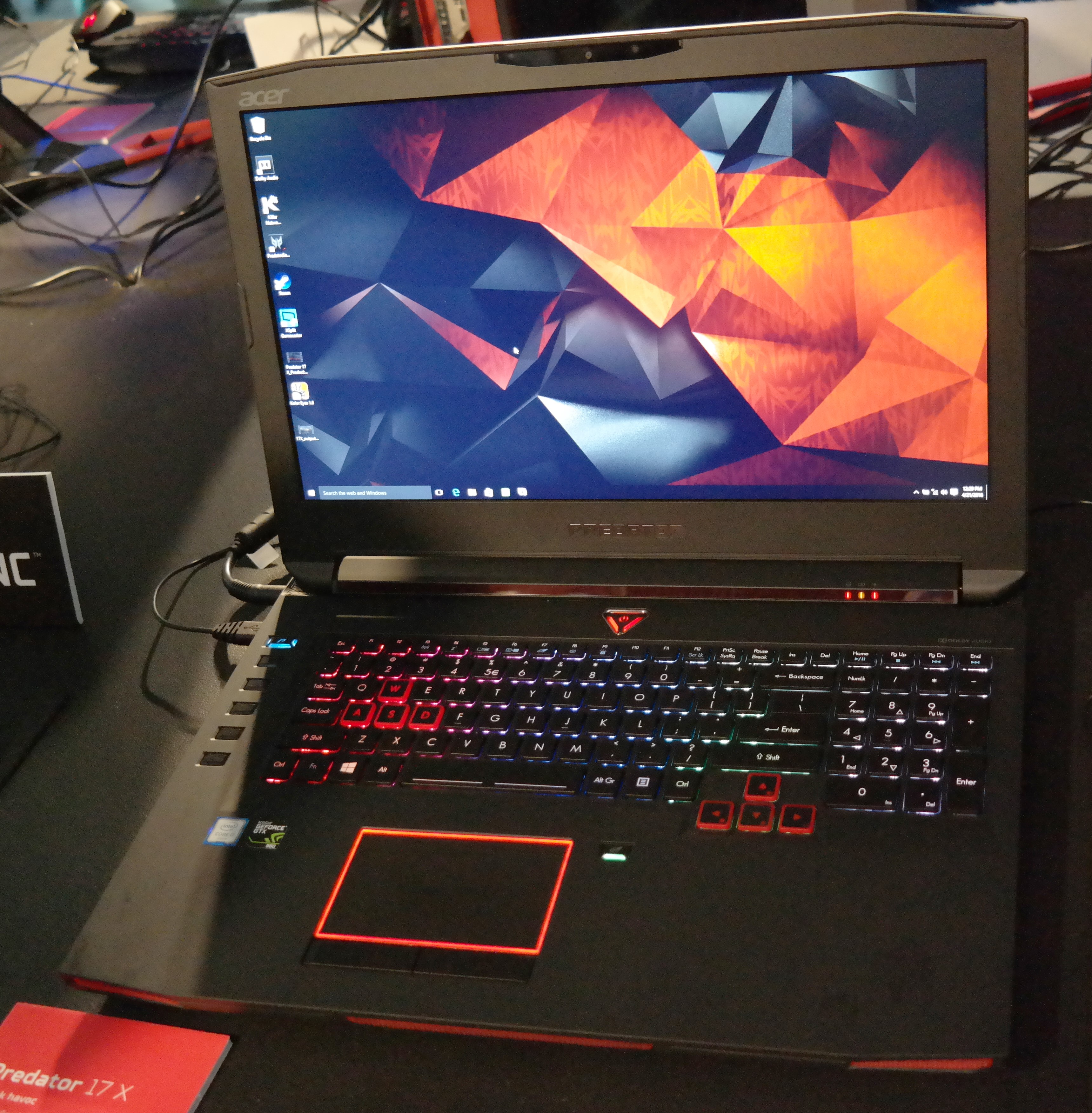
    The Acer Predator 17X has a aggressive design.
    The Acer Predator 17X has a aggressive design.
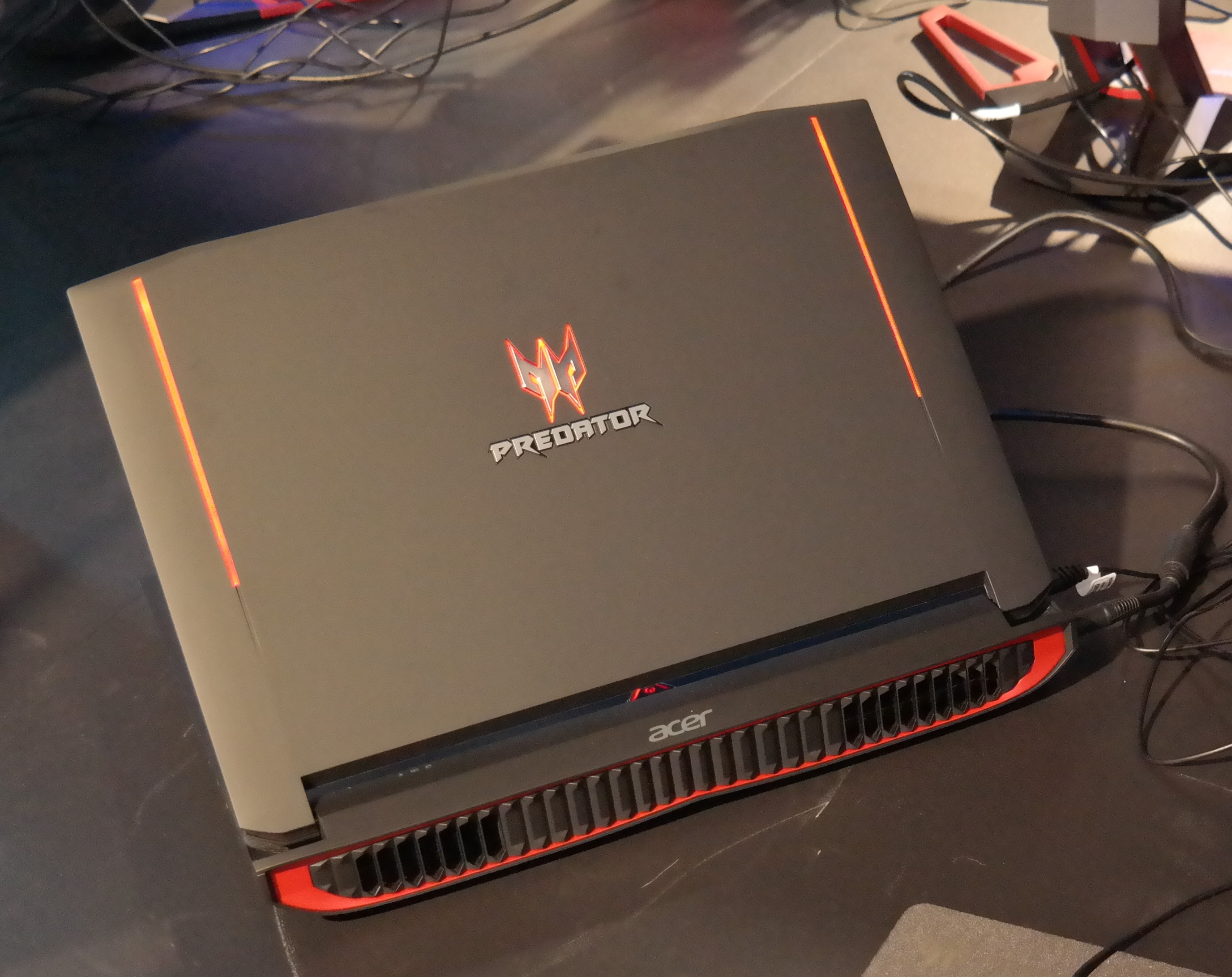
    Predator branding is hard to miss.
    Predator branding is hard to miss.
    Whereas the previous Predator 17 topped out with a GTX 980M, the mobile alternative to the beastly 980, the 17X provides what Acer claims is unparalleled performance, all within a familiar (that is bulky, with a garish design) gaming laptop chassis. Acer achieves this with an innovative fan system, involving three whirling blades instead of two.
    Most laptops use two fans: one to intake cool air from below the unit, and an other to exhaust hot air from the back or sides. Acer uses its AeroBlades, which Acer claimed are the world’s thinnest at IFA 2015, to intake air from the front of the device, similar to a car grille, circulate through the system, and then exhaust it through the back. Air coming the front of the Predator 17X is much cooler than air entering from the bottom, keeping the system running efficiently, or so Acer claims.  

    Complementing the GPU will be either a 2.7GHz Intel Core i7-6820HK, which Acer claims can be steadily overclocked up to 4GHz, or 2.6GHz Intel Core i7-6700HQ, and up to 64GB RAM. Storage options include three SSDs ranging from 128GB to 512GB and an HDD to 2TB. GPU options include the desktop-class  Nvidia GeForce GTX 980 with 8GB GDDR5, or the Nvidia GeForce GTX 980M with 8GB GDDR5. All that gets you a laptop that meets Nvidia’s “VR Ready” standard, and works with both the Oculus Rift and HTC Vive (as well as the more obscure OSVR and StarVR.or 17X has backlit keys and room formacros. 
    The Acer Predator 17X measures 16.65 x 12.66 x 1.75 inches and weighs a hair over 10 pounds. It has a single USB Type-C input, four full-sized USB 3.0 ports, HDMI port, Ethernet, and an SD card slot. It looks every bit like a Predator notebook, with an uncanny resemblance to the Predator 17, complete with matte black casing, sharp angular protrusions, and aggressive red accents. The chiclet-style keyboard features multi-colored backlighting (with plenty of travel), and the large trackpad sports two separate mouse button underneath, along with it a light stripe of its own. A row of five macro buttons, plus another to toggle functions, sits to the left side.
    The Predator 17X sports a similar 17.3-inch IPS display at the Predator 17, with either a 1920 x 1080 or  3840 x 2160 resolution. Acer claims the battery life is good for “up to 3 hours,” but we’d be shocked if it lasts that long on anything but the lightest load.
    VR readiness and desktop graphics don’t come cheap. The Acer Predator 17X starts at $2,799 and is expected to ship to the US in June. We are guessing a Predator 17X outfitted with a 4K display, three SSDs, and 2TB HDD will cost a pretty penny more.
     

    Sample text

    Sample Text

    Sample Text

     
    Blogger Templates